
Electric vehicle fires are far less common than petrol or diesel incidents, but they present unique dangers. EV fire safety practice in the UK must be reshaped to tackle this threat. With more than 1.4 million battery-electric cars now on British roads, and government mandates on car sales conforming to zero-emission targets by 2035, the risks cannot be ignored. When lithium-ion batteries fail, they do not just burn. They can enter thermal runaway, releasing hydrogen fluoride (HF) gas, phosphoryl fluoride (POF₃), carbon monoxide (CO) and hydrogen cyanide (HCN) and causing oxygen depletion. This toxic mix is invisible, fast-moving and hard to predict, which is why gas detection in EV fires should be standard practice for responders. Prevention protocols are not only as important as suppression tactics, but safer, more effective and far more practical.
- EV fires are rarer than petrol or diesel, but far more dangerous.
- Lithium-ion batteries release HF, HCN, CO and deplete oxygen.
- Fires are hard to extinguish and prone to re-ignition.
- Gas detection is the only way to monitor these invisible hazards.
- IGD solutions like the POLI multigas portable detector and TOC-750 Safe Area fixed detector provide critical protection for crews and infrastructure.
Battery-electric cars account for about 22% of new registrations in 2025. UK EV fire statistics show that electric vehicle fires are less frequent than petrol or diesel fires, but the operational burden can be much higher. This makes EV fire safety training increasingly important. While London EV fire data from 2023 proves that petrol and diesel fires are overrepresented compared to electric vehicle fires, frequency is not the only metric that matters. The lithium-ion battery fire risks that accompany thermal runaway create prolonged heat, complex plumes and the potential for re-ignition, even many days after initial suppression.
The mPower Poli is a portable multi-gas monitor and one of the most powerful portable gas detectors on the IGD roster. With the ability to simultaneously monitor the gases associated with Ev fires and a pump option for perimeter checks, the Poli is an essential frontline tool for gas detection for firefighters. With options for HF, HCN and CO, emergency responders can be quickly alerted to the threat of an EV fire before it happens. Advanced data logging capabilities enable data-driven decisions and personal exposure monitoring, not only alerting responders to the threat of a fire, but also providing time-weighted averages on their own exposure. To address the risks of EV fires, we first need to understand how and why they happen. The diverse gas risks presented by EV fires make them even more dangerous and make tackling them more complex. Each distinct gas comes with its own unique threats and mandated exposure limits. Understanding how each of these gases operates is an essential part of establishing operational safety protocols. Here’s a breakdown:
- Suppression challenge: Battery modules are sealed and hold heat. Cooling may need very large volumes of water.
- Re-ignition: Cells can reheat and flare hours or days later. Vehicles may need isolation.
- Toxic plume: Visual smoke does not show concentrations. HF and HCN can spike during cooling.
- Operational uncertainty: Without hydrogen fluoride detection and multi-gas monitoring, cordons and re-entry are guesswork. When it comes to highly toxic gases, guesswork is not an option.
Fire safety systems react to a fire that has already occurred. Gas detection systems alert you to the threat of a fire before it occurs, providing you with lifesaving information on the invisible, odourless gases in the environment and protecting your people from unnecessary risks. The best way to enhance EV fire safety is by prioritising monitoring. Gas detection in EV fires informs cordons, ventilation and PPE requirements, and proves when an area is safe to re-enter.
- Gas detection for firefighters should include HF, HCN, CO and O₂.
- Live readings support decisions on SCBA (self-contained breathing apparatus), hot-zone control and medical triage.
- Data logs assist incident reports and EV fire safety training UK programmes.
- Fixed gas detection systems in car parks and depots give early warning where EVs are concentrated.
- Alerts can interface with charging station fire safety controls and ventilation.
- Ideal for underground parking, logistics depots and recycling sites handling damaged packs.
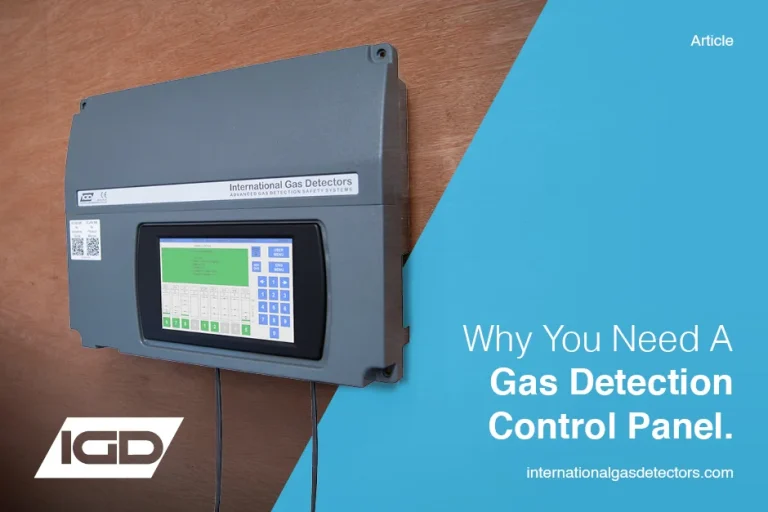
Our TOC-750 detector is the gold standard in safe area gas detection. Featuring a vast range of our long-life sensors with options for over 700 gases and vapours, and a detection range of 75m2, they are the ideal solution for the 24/7 monitoring of any environment in which EV-related gas hazards may occur. As part of our Sentinel+ system, they provide alarm outputs, targeted detection and easy, cost-effective installation and operation, linking in series with other detectors to reduce cabling requirements and installation time.
- Tunnel collision: Portable monitoring shows HF rising and oxygen at 17%. Cordon extends and ventilation engages before exposure escalates.
- Multi-storey car park: During suppression, HF spikes. Crews maintain SCBA, and fixed detection confirms when levels are back under the HF exposure limits.
- Recycling facility: Damaged packs off-gas without visible flame. Fixed detectors raise an early alarm, and the area is cleared before ignition.
At IGD, we don’t shy away from the future; we prepare for it. International Gas Detectors has been designing gas detection products and supporting gas detection safety for more than a century. Our focus is prevention, not just reaction. From HF monitors for emergency services to fixed gas detection systems in car parks and depots, we help teams eliminate guesswork in favour of data-driven decision making so that we can help protect responders and reopen sites safely.
- Training: IGD Academy provides EV fire safety training UK, including interpretation of HF, HCN, CO and O₂ readings.
- Support: Aftercare+ keeps portable gas detectors and fixed systems calibrated and ready.
- Are electric cars more likely to catch fire?
No. Current UK EV fire statistics indicate electric vehicle fires are less common than petrol or diesel fires, though they are more complex to control. - How dangerous are EV fires?
Very. The risk comes from heat, re-ignition and toxic gases. Hydrogen fluoride detection and multi-gas monitoring reduce uncertainty and exposure. - What makes EV fires hard to put out?
Thermal runaway continues to generate heat. Cooling sealed modules is slow, which is why EV fire suppression challenges require persistent monitoring.