

Home / Applications / Medical Gas Detection
Medical Gas Detection
Many modern Doctors Surgeries, Dental Practices and Cosmetic Surgeries offer on site procedures away from hospitals. Many of these procedures use Nitrous Oxide (N2O) as an anesthesia gas, liquid Nitrogen as a freezing agent or oxygen to help with breathing. Both can cause problems if they are not carefully monitored and controlled, this is where you need a medical gas detection system.
Continue reading for additional insights, or alternatively, click the button below to access our full online downloadable, e-book datasheet which is packed with valuable information and key specifications.
IGD’s Solution:
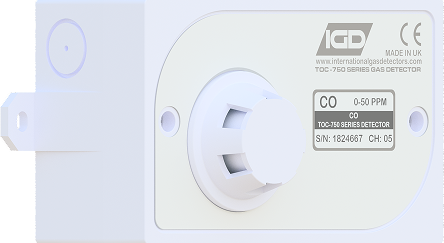
IGD offer pre-calibrated and pre-wired modular systems that can be quickly fitted to provide protection. Systems can be scaled to suit the application or can have options added as requirements grow. The TOC-750BAV range from IGD are ideally suited to these applications. For a simple Medical Gas Detection system, where liquid Nitrogen is used in an area a pre-wired TOC-750BAV fitted with an Oxygen sensor to monitor for any Oxygen deletion is an effective cost effective solution. These systems ship pre-wired with a mains plug and pre-configured allowing the used to plug in and use out of the box. If the requirement expands then further detectors can be added.
Oxygen Enrichment in Hospital Wards
With the current global pandemic with COVID-19, the medical industry is being pushed to the limit. One of the concerns raised by the UK health officials is the increase of oxygen on hospital wards due to the increase in ventilators. we have created an article called Oxygen Enrichment in Hospital Wards which discusses this issue and helps provides clients with a number of solutions that fit their needs. Some of the common features on our oxygen enrichment systems include:
- Easy to install with patented self-setup technology. Allowing onsite facilities staff to install the oxygen sensors without the requirement for an installation engineer
- Non-self depleting technology – Our oxygen sensors have a 5 year operational lifetime, the industry standard is 2 years. Meaning once the system is installed you will be continually reducing upkeep costs year after year.
- Built in audible and visual alarms – Our control panels all have built in audible and visual alarms which means they can operate as room status indicators for hospital staff.
- Connections to BMS and Fire systems – you can connect all our control panels to a site wide BMS, Fire system or set them up for text and email alerts. Thus ensuring the correct members of staff are notified when there is an increase of oxygen on the ward.
- Connections to solenoid valves or shut off devices – all our systems can be connected to shut off devices such as solenoid valves. This ensures that in case there is a leak on the ward the pipeline is automatically shut off before it becomes hazardous to health.
Clients we have supplied our systems to:
- NHS Hospitals in England, Wales, Scotland and Ireland.
- Birmingham Dental Hospital
- Manchester NHS Nightingale
- Nightingale Hospitals across the UK and Ireland
- Hospital across Ireland
Related Products
TOC-750 Addressable PID VOC Detector
TOC-750X Photoionisation Detector
TOC-750 Fixed SF6 Gas Detector – Addressable Detector
TOC-625-NHS – Oxygen Enrichment Monitor
TOC-30 Analogue Gas Detector
TOC-20 Refrigerant Gas Detector
Hydrogen Gas Detection Technology
Hydrogen is an odourless, colourless, and tasteless gas. Industry, therefore, relies on hydrogen gas detectors to detect leaks. IGD has two technologies suitable for detecting hydrogen: pellistor sensors and electrochemical sensors.
Pellistor
Pellistor, or catalytic bead, sensors rely on the use of a catalyst that causes flammable gas within the sensor to ignite at a much lower temperature than usual. When combustion occurs, heat is produced in proportion to the amount of flammable gas present. The concentration of flammable gases can then be derived from this measurement and expressed as a percentage of the lower explosive limit (%LEL).
Pellistor sensors are typically used as a general “catch-all” technology for flammable gas detection. Pellistors respond to any flammable gas, measuring 0-100% LEL. Since a 4% concentration of hydrogen is explosive, this corresponds to 100% LEL. Most legislation (such as the UK Dangerous Substance Explosive Atmosphere Regulations (DSEAR)) requires an atmosphere to be maintained below 25% LEL. IGD pellistor gas detectors are the world’s most reliable, cost effective and robust of their kind in the market, making them ideal for hydrogen gas detection.
Electrochemical
Electrochemical sensors work by reacting the target gas – in this case, hydrogen – with an electrolyte, which produces a current in proportion to the amount of gas present. This allows for much more sensitive hydrogen gas detection compared to pellistor sensors. For example, 25% LEL equates to 1% hydrogen concentration, or 10,000 ppm. IGD electrochemical gas detectors offer sensitivity in the ranges of 0-1000 ppm to 0-40,000ppm. However, the downside of this extreme sensitivity is that electrochemical sensors can be destroyed on exposure to levels exceeding their measurement range, requiring them to be replaced. IGD electrochemical hydrogen detectors are ideally suited to applications where detection of hydrogen at low levels is critical.
Other Detection Technologies
Several other gas detection technologies exist; however, these are not recommended for hydrogen detection.
Infrared sensors are unable to detect hydrogen since diatomic molecules like hydrogen don’t absorb infrared radiation.
Thermal conductivity is another viable technology, though low sensitivity and selectivity render them poor for hydrogen detection applications.
Semiconductor gas detectors can be used to detect hydrogen; however, these sensors also typically respond to a wide range of other gases and vapours. The likelihood of false alarms means that semiconductor sensors are not advised for these applications.
Related Products
Why You Need A Gas Detection Control Panel
The Importance of Regular Gas Detector Maintenance