
Home / Applications / Boiler Room Gas Detection
Boiler Room Gas
Detection Systems
Gas fired boiler plant requires careful consideration in relation to gas detection. Boiler plant rooms can range from small boilers in a school/office block to larger installations. IGD has over 100 years of experience in providing boiler room gas detection solutions. Typical leak detection could be for Natural Gas (Methane), LPG or other fuel gases. IGD also provide monitors for Carbon Monoxide or CO2 detection in boiler plant rooms where products of combustion can be an issue.
Additionally, where boiler flues pass through other rooms before venting then Carbon Monoxide detectors must be fitted to mitigate for leaking flues. We can provide both turnkey solutions from design to install and aftercare. Or you can buy online, and you will only require regular service (no install engineer required).
Read our latest Case Study – Updating Boiler Room Gas Detection Equipment For Qualia Care Homes


Continue reading for additional insights, or alternatively, click the button below to access our full online downloadable, e-book datasheet which is packed with valuable information and key specifications.
We have multiple solutions to suit your requirements:
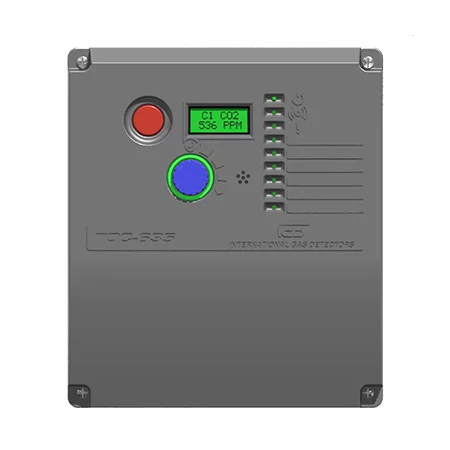
- For smaller formats our MICRO controllers are ideal. These can be installed by the end user within a matter of minutes. With our industry first 1 click automatic system setup, you can install it yourself without any prior knowledge in gas detection by following our guidelines. Using our ground breaking Sentinel+ communication, it only requires a 2-Core cable to connect the sensors in a radial. (see picture below)
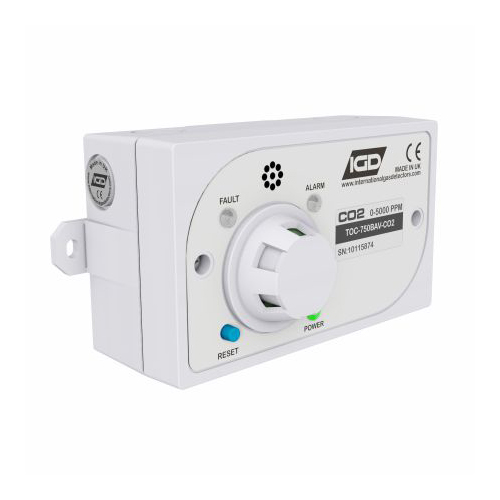
- Our 750B series standalone gas detectors are ideal for small format boilers where only one or two detectors are required. These can be connected to a boiler control unit, BMS or fire system via the relay outputs. (Pictured Below)
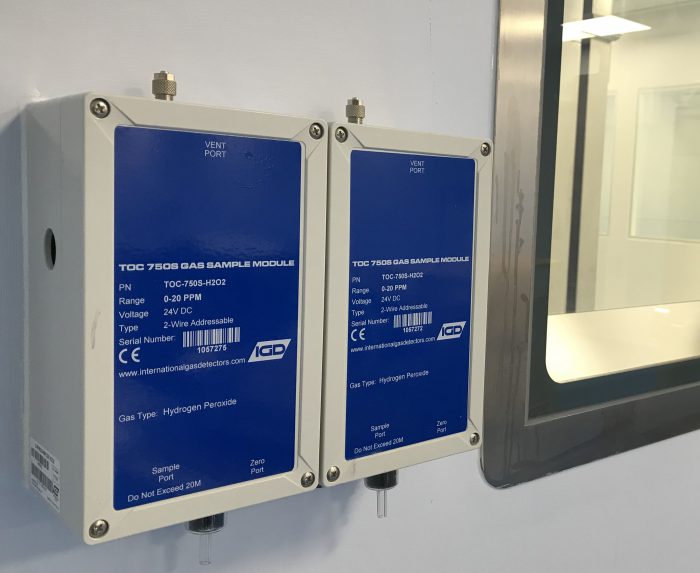
- Finally, for larger boiler installations and where the ceiling is too high for a conventional detector, our 750S Series Aspirated detectors and gas hoods, are the ideal solution. Our continuous samplers allows you to place them at a convenient point; meaning your engineer doesn’t require Working at Heights permits to service the system. (pictured below).
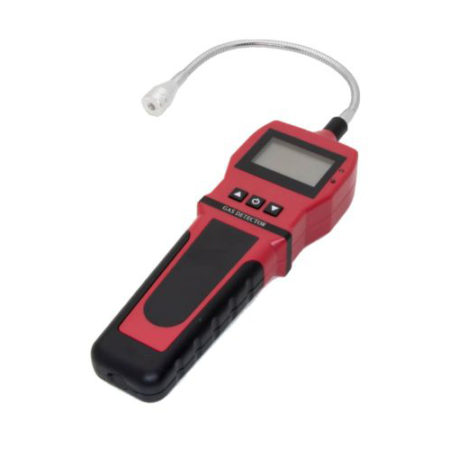
- Finally we can provide portable gas detectors including standard 4 gas monitors for confined entry. Confined space monitors ensure that as a boiler engineer you have a warning device, as some boiler rooms may not have a functioning boiler room gas detection system. Finally we can also provide portable flammable gas leak detectors. These are provided with a flexible gooseneck. This allows you to easily pinpoint leaks in boiler pipework.
Call us on +44(0)161 483 1415 or email sales@internationalgasdetectors.com to learn more on how IGD can help with your boiler gas detection needs.
Click here to read our article on boiler room gas detection system solutions
Related Products
TOC-750 Addressable PID VOC Detector
TOC-750X Photoionisation Detector
TOC-750 Fixed SF6 Gas Detector – Addressable Detector
TOC-625-NHS – Oxygen Enrichment Monitor
TOC-30 Analogue Gas Detector
TOC-20 Refrigerant Gas Detector
Hydrogen Gas Detection Technology
Hydrogen is an odourless, colourless, and tasteless gas. Industry, therefore, relies on hydrogen gas detectors to detect leaks. IGD has two technologies suitable for detecting hydrogen: pellistor sensors and electrochemical sensors.
Pellistor
Pellistor, or catalytic bead, sensors rely on the use of a catalyst that causes flammable gas within the sensor to ignite at a much lower temperature than usual. When combustion occurs, heat is produced in proportion to the amount of flammable gas present. The concentration of flammable gases can then be derived from this measurement and expressed as a percentage of the lower explosive limit (%LEL).
Pellistor sensors are typically used as a general “catch-all” technology for flammable gas detection. Pellistors respond to any flammable gas, measuring 0-100% LEL. Since a 4% concentration of hydrogen is explosive, this corresponds to 100% LEL. Most legislation (such as the UK Dangerous Substance Explosive Atmosphere Regulations (DSEAR)) requires an atmosphere to be maintained below 25% LEL. IGD pellistor gas detectors are the world’s most reliable, cost effective and robust of their kind in the market, making them ideal for hydrogen gas detection.
Electrochemical
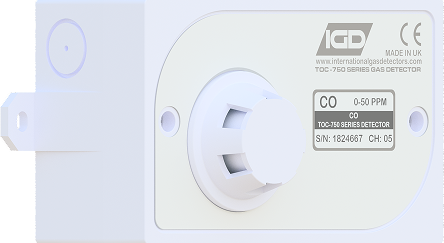
Electrochemical sensors work by reacting the target gas – in this case, hydrogen – with an electrolyte, which produces a current in proportion to the amount of gas present. This allows for much more sensitive hydrogen gas detection compared to pellistor sensors. For example, 25% LEL equates to 1% hydrogen concentration, or 10,000 ppm. IGD electrochemical gas detectors offer sensitivity in the ranges of 0-1000 ppm to 0-40,000ppm. However, the downside of this extreme sensitivity is that electrochemical sensors can be destroyed on exposure to levels exceeding their measurement range, requiring them to be replaced. IGD electrochemical hydrogen detectors are ideally suited to applications where detection of hydrogen at low levels is critical.
Other Detection Technologies
Several other gas detection technologies exist; however, these are not recommended for hydrogen detection.

Infrared sensors are unable to detect hydrogen since diatomic molecules like hydrogen don’t absorb infrared radiation.

Thermal conductivity is another viable technology, though low sensitivity and selectivity render them poor for hydrogen detection applications.

Semiconductor gas detectors can be used to detect hydrogen; however, these sensors also typically respond to a wide range of other gases and vapours. The likelihood of false alarms means that semiconductor sensors are not advised for these applications.
Related Products
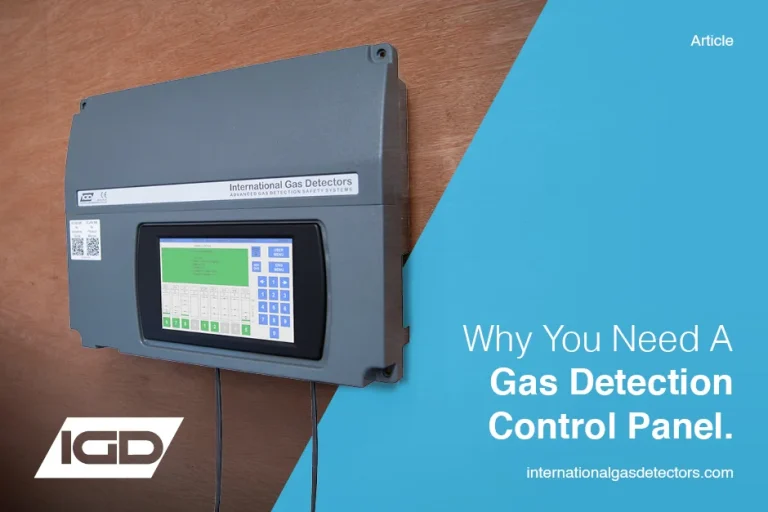
Why You Need A Gas Detection Control Panel

The Importance of Regular Gas Detector Maintenance