

Home / Applications / Gas Detection in the Drinks Industry
Gas Detection in the
Drinks Industry
Gas hazards are present throughout many different parts of the drinks industry: from the carbon dioxide used for the carbonation of soft drinks to the range of dangerous gases that can be produced during fermentation and distillation of alcoholic drinks. Whether these gases are essential processing aids or unwanted byproducts, accurately monitoring them using gas detectors is an essential part of identifying hazards and ensuring the wellbeing of personnel in the drinks industry.
Continue reading for additional insights, or alternatively, click the button below to access our full online downloadable, e-book datasheet which is packed with valuable information and key specifications.
Gases in the drinks industry can be broadly categorized as either processing aids, which have technical effects during processing or storage; byproducts, unwanted gases that are unavoidably produced during the production of a drink; or additives. Between them, these gases present risks of toxicity, flammability and asphyxiation.
Additives
Carbon dioxide is by far the most prominent gaseous additive in the drinks industry, providing the basis for the carbonation of drinks. The carbonation process involves dissolving carbon dioxide in drinks at high pressure, so that small bubbles of carbon dioxide are formed when the beverage container is opened at atmospheric pressure. While not generally considered to be toxic, carbon dioxide is a dangerous toxic gas hazard and can cause a range of health problems including headaches, dizziness and loss of consciousness at higher concentrations.1
Nitrogen is often used in a similar capacity, adding a creamy texture and head to beers and, more recently, coffee. Nitrogen is not toxic – it makes up around 71% of the air we breathe – however, it is an inert gas which does represent an asphyxiation hazard.
Champagne producing and bottling in Alsace, France. Small wine-producing business.
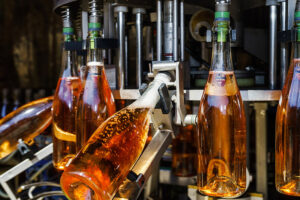
Champagne producing and bottling in Alsace, France. Small wine-producing business.
Processing Aids
Both carbon dioxide and nitrogen are also used as “headspace flushing” gases, used to fill the “empty” space in a beverage container.2 In this role, these gases prevent the beverage from oxidizing or spoiling while also allowing for thermal expansion. This means that asphyxiation from nitrogen and toxic effects of CO2, is of particular concern in drinks packaging/bottling plants.
Byproducts
Many hazardous gases are produced as byproducts in the drinks industry, primarily by the production of alcoholic drinks. Breweries, wineries and distilleries all produce carbon dioxide from the fermentation of sugars into alcohol.
Distilleries produce other hazardous gases, too. Sulphur dioxide – a toxic gas – is often produced by the malting process. In addition to this, flammable vapors are produced by distillation, where alcohol is evaporated from solution and condensed to create strong alcoholic spirits.
Gas hazards are present in the drinks supply chain right up to the point of service: carbon dioxide and nitrogen gases are used as dispense gases in pubs and bars. These environments can pose a particularly high asphyxiation risk as storage cellars are usually poorly ventilated. However it is important to note that carbon dioxide poses a toxic effect before asphyxiation and requires a detector specific to carbon dioxide to provide detection.
The Importance of Monitoring Gas Hazards in the Drinks Industry
Unfortunately, accidents and fatalities do occur in the drinks industry due to gas hazards. As a result, all the gases discussed in this article (with the exception of nitrogen) have regulated toxicity or flammability limits that must be adhered to. In the UK, safe workplace exposure limits are codified by the Health and Safety Executive (HSE) in documentation for the Control of Substances Hazardous to Health (COSHH).3
The only way for drinks manufacturers, bottling plants and bar/pub cellar owners, to ensure the safety of personnel and demonstrate compliance to legislative limits or approved codes of practice is to monitor the atmosphere for the gases in question. Therefore, a gas detection system is a vital part of risk mitigation for organizations in the drinks industry.
Gas Detection Solutions for the Drinks Industry
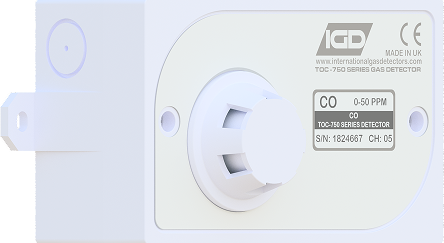
Gas detectors are typically either portable personal units or fixed units that continually monitor specific areas. For applications in the drinks industry, common target gases include carbon dioxide, sulphur dioxide and flammable hydrocarbons (CxHx); oxygen levels should also be monitored. Although excess oxygen levels are not generally a problem in the drinks industry, monitoring oxygen levels is the best way of protecting against inert, asphyxiation hazards Our oxygen monitors will provide both depletion and enrichment alarms.

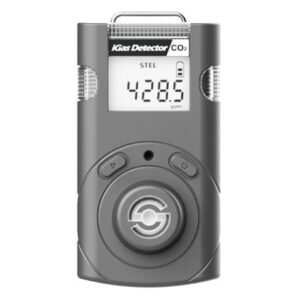
IGD portable gas detectors provide additional protection for personnel in the drinks industry, especially service workers, delivery drivers and staff. The iGAS CO2 is a perfect light weight and easy to use CO2 portable monitor. The MGT-P confined space monitor provides clients with both flammable and oxygen depletion personal alarms. However, portable gas detectors only monitor the immediate surroundings of the worker. While this is important – especially in environments where gas hazards may be highly unpredictable or confined spaces – such a system can only alert the user if ambient levels of target gases exceed a certain threshold. The portable detector can only detect the hazardous gases when the person is in the hazardous gas and thus only provide a last line of defence against gas hazards. Therefore portable detectors are not sufficient to ensure safety if a worker with a portable gas detector enters an area with a high concentration of hazardous gas.
Talk to the Experts in Gas Detection Today
With over 100 years of experience in the gas detection industry, IGD understands the unique challenges facing different industries. IGD offers a comprehensive range of support services for any gas detection solution, from consultancy and specification to installation and ongoing maintenance and finally training. To find out more about our gas detection solutions for the drinks industry, get in touch with a member of our team today.
References and Further Reading
- General hazards of Carbon Dioxide. https://www.hse.gov.uk/carboncapture/carbondioxide.htm.
- Headspaces | Cetie. https://www.cetie.org/en/headspaces_4_78.html.
- GREAT BRITAIN: HEALTH AND SAFETY EXECUTIVE. WORKPLACE EXPOSURE LIMITS (2020). https://www.hse.gov.uk/pubns/priced/eh40.pdf
Related Products
TOC-750 Addressable PID VOC Detector
TOC-750X Photoionisation Detector
TOC-750 Fixed SF6 Gas Detector – Addressable Detector
TOC-625-NHS – Oxygen Enrichment Monitor
TOC-30 Analogue Gas Detector
TOC-20 Refrigerant Gas Detector
Hydrogen Gas Detection Technology
Hydrogen is an odourless, colourless, and tasteless gas. Industry, therefore, relies on hydrogen gas detectors to detect leaks. IGD has two technologies suitable for detecting hydrogen: pellistor sensors and electrochemical sensors.
Pellistor
Pellistor, or catalytic bead, sensors rely on the use of a catalyst that causes flammable gas within the sensor to ignite at a much lower temperature than usual. When combustion occurs, heat is produced in proportion to the amount of flammable gas present. The concentration of flammable gases can then be derived from this measurement and expressed as a percentage of the lower explosive limit (%LEL).
Pellistor sensors are typically used as a general “catch-all” technology for flammable gas detection. Pellistors respond to any flammable gas, measuring 0-100% LEL. Since a 4% concentration of hydrogen is explosive, this corresponds to 100% LEL. Most legislation (such as the UK Dangerous Substance Explosive Atmosphere Regulations (DSEAR)) requires an atmosphere to be maintained below 25% LEL. IGD pellistor gas detectors are the world’s most reliable, cost effective and robust of their kind in the market, making them ideal for hydrogen gas detection.
Electrochemical
Electrochemical sensors work by reacting the target gas – in this case, hydrogen – with an electrolyte, which produces a current in proportion to the amount of gas present. This allows for much more sensitive hydrogen gas detection compared to pellistor sensors. For example, 25% LEL equates to 1% hydrogen concentration, or 10,000 ppm. IGD electrochemical gas detectors offer sensitivity in the ranges of 0-1000 ppm to 0-40,000ppm. However, the downside of this extreme sensitivity is that electrochemical sensors can be destroyed on exposure to levels exceeding their measurement range, requiring them to be replaced. IGD electrochemical hydrogen detectors are ideally suited to applications where detection of hydrogen at low levels is critical.
Other Detection Technologies
Several other gas detection technologies exist; however, these are not recommended for hydrogen detection.
Infrared sensors are unable to detect hydrogen since diatomic molecules like hydrogen don’t absorb infrared radiation.
Thermal conductivity is another viable technology, though low sensitivity and selectivity render them poor for hydrogen detection applications.
Semiconductor gas detectors can be used to detect hydrogen; however, these sensors also typically respond to a wide range of other gases and vapours. The likelihood of false alarms means that semiconductor sensors are not advised for these applications.
Related Products
Why You Need A Gas Detection Control Panel
The Importance of Regular Gas Detector Maintenance