

What Are VOC Gases?
VOC gases are chemical compounds where one of the elements is carbon. Volatile organic compound gases are compound gases that have a high vapor pressure and low water solubility. VOC’s are manmade chemicals that are used for manufacturing pharmaceuticals, paints, and refrigerants. They are usually industrial solvents or by-products formed by chlorination in water treatment such as chloroform.
VOC’s are usually components of petroleum fuels, paint thinners, by-products from industrial processes, and dry-cleaning agents. Some VOC gases have short or long-term health effects with high concentrations indoors around certain office equipment. The volatility of VOC’s is largely due to their extremely low boiling point, resulting in large amounts of molecules evaporating from the liquid or solid form of the compound and penetrating the nearby air.
This article will outline some of the key characteristics of VOC gases, their applications, and how they can be used safely.
Where Are VOC Gases Found?
VOCs are used as ingredients in a range of household products such as varnishes, paints, glues and wax as well as many degreasing agents, cleaning, and hobby products. VOC gases are released when these organic compounds are used and can even be emitted during storage, the gases can also remain in the air long after usage. One example is formaldehyde, a VOC gas that evaporates from paint, having a boiling point of -19°C.
Therefore VOC gases must be monitored using a VOC gas detector. VOC gas detectors can be scaled up or down to meet site requirements to ensure worker safety.
 PID detection in industrial cleaning
Common VOC Gases Used in Day-to-Day Life
Many VOC’s appear frequently in our day to day lives such as:
- Benzene
- Acetone
- Xylene
- Formaldehyde
- Ethylene Glycol
- Toluene
Health Impacts of VOC Gases
Anthropogenic VOC’s are manmade and regulated by law, particularly when indoors where concentrations are elevated. Harmful VOC gases are not inherently toxic; however, they have to compound long-term health effects as concentrations are low and thus symptoms develop slowly over time.
Often they are detectable by scent, however, some have no odour at all. The level of odour doesn’t give much indication of the amount of risk from inhalation and some highly dangerous VOC gases emit no scent at all.
Detecting VOC Gases with International Gas Detectors
VOC gases are an important element of a range of industrial processes and products. They can be detected using specialized gas detection sensors as well as PID technology.
Places, where VOC’s are often present, must closely monitor their environment and surroundings using a fixed VOC gas detector. These instruments are permanent installations that offer constant measurement of VOC gases in the air they sample.
With over 100+ years of dedicated gas detection manufacturing experience and 20+ years in VOC detection, we have the go to solution for fixed VOC gas monitoring. We have released a new range of PID sensors, containing technology which outperforms current alternatives on the market. Some of the key elements include:
- 50-200% longer sensor lamp life (depending on sensor type) using our non-electrode UV lamp design.
- 70% cost saving using our leading addressable technology
- Not affected by humidity changes
- Data for over 700 VOC gases and vapours
- Wide selection of ranges available depending on the VOC gas type
- Unique electrode stack design enhancing low level accuracy and reducing long term drift.
- Full product offering from non-ATEX commercial detectors to ATEX/IECEx detectors and portable monitors.
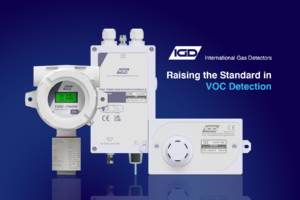 IGD’s new VOC detection range
Check out our full range of PID detectors here. Plus, you can talk to our team live on chat or arrange for a video call/in person demonstration. Thus, allowing you to see how we are raising the standard for VOC gas detection.