
As a lot of our readers may have seen in our PID and VOC articles, we frequently mention the terms ‘sputtering’ and ‘humidity’ and their effects on a PID sensor. But what does sputtering mean? And how exactly do these have a negative effect on the performance of a PID? This article aims to answer these questions, detailing these issues and how IGD has managed to negate them from our PID sensors.
To fully understand the effects of sputtering and humidity, we must first discuss how a PID works.
How Does a PID Sensor Work?
Within a PID Sensor, there is a small UV lamp filled with gas (most likely Krypton) and 2 small mesh gratings. The UV lamp produces UV light within the chamber of the sensor, and casts this over the small mesh gratings. This UV light ionizes the VOC gases entering the chamber, splitting them into positive and negative ions. These ions are them passed through the mesh gratings, with the positive ion being attracted to the negative grating and the negative ion being attracted to the positive grating. The positive charges passed over to these gratings create an electrical current, equating to a VOC reading on the detector head. Check out one of our articles here to see a small video demonstrating this process.
What is Sputtering and How Does it Affect my PID?
Inside most PIDs, there is a metal ring, known as an electrode, which is used to help keep in the gas within the lamp. As the PID sensor is used more and more, the surface on the metal ring within the lamp ends up vaporising. These vapours can coat the inside of the lamp, hindering its ability to produce UV light and thus, affecting the sensor’s ability to monitor VOC gases and rendering it ineffective.
The PID can become ineffective without any notification of this, as it will just read that there is none of the target VOC gas in the area. Therefore, personnel can be put in danger without their knowledge, being exposed to highly carcinogenic gases in their day-to-day work, resulting in long-term staff illness. Thus, it is important to implement a PID sensor where sputtering is minimal to ensure the safety of your personnel.
How Does Humidity Affect my PID Sensor?
When environments housing a PID have constantly varying temperatures and moisture levels, this can cause a build-up of condensation on the inside of the PID lamp. This condensation can then affect the UV light being emitted by the lamp, thus affecting the ionizing energy of the VOCs. Ultimately, resulting in sensor drift, false readings or potentially no reading at all.
The result of this is highly dangerous, potentially exposing personnel to high levels of a hazardous VOC gas, such as formaldehyde or benzene. Thus, having a PID sensor with little-no ability to allow for a build-up of condensation is important in ensuring the safety of your personnel.
How Can I Avoid These Effects on my PID Sensor?
IGD have a century of experience in gas detection technology and 20 years of PID expertise. We have utilised our knowledge to provide clients with a new, elevated standard for PID sensors.
Our latest PID features a non-electrode UV lamp, thus does not contain the metal ring electrode within the sensor. This completely curtails the effects of sputtering and contamination but does not decrease your PID’s reliability or performance. Ultimately, delivering a lower maintenance yet high performance PID sensor.
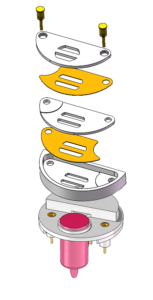
Additionally, IGDs PID sensors feature a patented electrode stack design. This design ensures that the issues of humidity and temperature are completely negated when a PID is in operation. So, the common issues of drift and false readings are no longer an issue with IGDs PID sensors, providing clients with a reliable and accurate gas safety system throughout the sensors life.
Investing in IGDs PID sensor can not only reduce sputtering and humidity effects, but it can also deliver additional market leading benefits. For example, our PID sensor can provide a massive 30,000-hour lamp life. This is a 200% increase to the market standard, making it the longest lamp life available on the market. Thus, reducing upkeep costs through replacements and increasing the PID sensors longevity.
Find out more
If you would like to find out more about our PID range, check out the VOC and Benzene Detectors section on our website or get into contact with our team today. We can provide expert advice, full support, and servicing on all of our PID sensors.